Locomotion
Change in life,
Not sure what to do,
Where is everyone?
Are they going to come back?
Someone new,
Somewhere new,
She may be nice,
but he I am alone.
Where is Lili?
Will we ever be together?
Wondering,
wishing,
hoping,
waiting,
but most of all,
praying.
Mama,
I miss you,
Daddy,
Where are you?
Smoke,
burning,
so much light,
but mostly
Darkness.
Find the light,
find the hope
Poetry.
Love,
light,
LaTenya.
Someday,
I'll finally find
a home.
Monday, April 15, 2013

Monday, April 8, 2013
House of the Scorpion!
Here are my thoughts on this weeks book via video:
https://www.dropbox.com/s/7u1771qgsdakb3q/Video%20Apr%2008%2C%205%2038%2026%20PM.mov
https://www.dropbox.com/s/7u1771qgsdakb3q/Video%20Apr%2008%2C%205%2038%2026%20PM.mov
Monday, April 1, 2013
Chains
While reading this text I made a lot of connections to texts I read as a child. One of these texts is the American Girls series about Addy. Addy is also a young slave who is trying to get to freedom. She is trying to protect her siblings, but unlike Isabel, Addy's mom is still alive, but they both have in common that they had to leave their fathers behind after being sold. Addy is luckily able to reunite with her family at some point, while at this point Isabel's reunion with Ruth has not transpired.
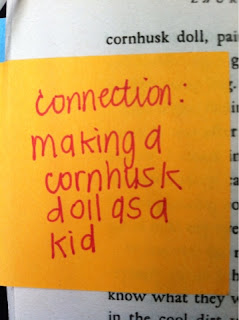
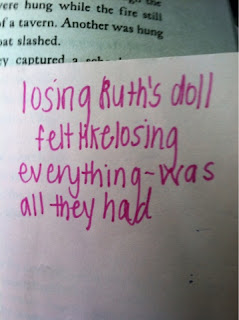
As a child I attended events around these books and this character, and was able to relate to Isabel at one point because, I too, had made a cornhusk doll. It is absolutely heartbreaking when she loses Ruth's doll, and she describes it as if she's lost everything. Even though it seems small to us, to her it was all she had. I wonder if this is how people who were affected by Hurricane Sandy felt.
There are many quotes throughout this text that really struck me. Here are a few:
 I can't imagine what it would feel like to be sold, and it is upsetting to here it described as feeling like a chipped bowl. It makes me feel some of the pain Isabel must have felt, but of course I can never know what it would feel like to be sold. The way Isabel describes her feelings gives the reader a sense of what it might be like to be a slave. The description of her feelings shows the strong person she is, but also her moments of weakness. She is seen as someone we can relate to, as she is not just strong but human.
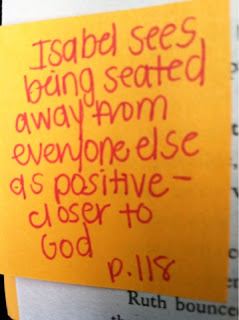 Isabel's faith in God allows her to keep going when times are tough. This shows the importance of religion in her life.

I once again, cannot imagine what it must feel like to lose your mother and be sold around to different people. She is continuously lied to and things are taken away from her. As she leaves she grabs seeds of her mothers, in hopes to keep something of her mothers. This shows that Isabel is hopeful and has great ties to her family.
Things I was thinking:


As a child I attended events around these books and this character, and was able to relate to Isabel at one point because, I too, had made a cornhusk doll. It is absolutely heartbreaking when she loses Ruth's doll, and she describes it as if she's lost everything. Even though it seems small to us, to her it was all she had. I wonder if this is how people who were affected by Hurricane Sandy felt.

There are many quotes throughout this text that really struck me. Here are a few:
 I can't imagine what it would feel like to be sold, and it is upsetting to here it described as feeling like a chipped bowl. It makes me feel some of the pain Isabel must have felt, but of course I can never know what it would feel like to be sold. The way Isabel describes her feelings gives the reader a sense of what it might be like to be a slave. The description of her feelings shows the strong person she is, but also her moments of weakness. She is seen as someone we can relate to, as she is not just strong but human.
  Isabel's faith in God allows her to keep going when times are tough. This shows the importance of religion in her life.
Isabel continues to reveal her feelings in many ways.

I once again, cannot imagine what it must feel like to lose your mother and be sold around to different people. She is continuously lied to and things are taken away from her. As she leaves she grabs seeds of her mothers, in hopes to keep something of her mothers. This shows that Isabel is hopeful and has great ties to her family.


Martin's Big Words
One of the coolest and most interesting facets of this text are the pictures. They offer a unique view of the subject and enhance understanding of the book.
The pictures, while they are not real, they look very realistic. They give the reader the sense that they are actually a part of the book. The spirituality that surrounded Martin Luther King Jr. is present throughout the book. In the front and the back of the book are double pages of stained glass windows which reflect Martin's minister background. He is also pictured at the pulpit preaching as an adult, and reading the bible as a child. The white only water fountain pictured below in conjunction with the quote "You are as good as anyone" allows readers to evoke feelings about this subject.


As mentioned above there are also quotes on most pages that are from either Martin or sometimes his mother. This text is obvious not fiction, but the narrative style of writing allows it more accessible to the reader. It provides the information in a succinct way which allows the reader to learn without being overwhelmed.
This text is perfect for students in the intermediate grades because it allows them to learn while being exposed to a story. By using this in the classroom students can be shown that it is okay to read picture books even as an older child. It will make these types of texts accessible, and show students below grade level that it is possible to read interesting nonfiction texts at their level.
In addition to the interesting facts in the story, there is a timeline at the end as well as additional resources to look into on the topic. These text resources allow students to learn more about the topic and further their learning.
Monday, March 11, 2013
Joey Pigza Swallowed the Key
As I began reading this book I immediately started to make connections to people I know and students I might have had in my class. I noticed how I kept making these connections, and also how I kept feeling as if a child was talking to me, since Gantos' writes just like I imagine a child with ADHD thinks. I kept seeing the same types of ideas pop up, so I made a wordle of some of the more popular ones.
 Obviously, I made a lot of connections to the text, as that word appeared the most times in my list. I think this is because, as a teacher, I have seen many students with hyperactivity and attention issues. I recognize the pain I've seen in them, in Joey. Throughout most of the beginning of the book I resented Mrs. Maxy because it seemed as if she did not understand Joey and how to help him. This is very possible, and is very realistic because many teachers are not sure what to with students who have ADHD. I don't think she entirely changed her ways, but became more compassionate towards Joey as the book went on. She still isn't sure how to deal with him, but she sees that he truly is a good kid who deserves her attention and love.
Another thing I struggled with, as a teacher, was how Joey just seemed to be shuffled around, with no one becoming truly accountable for him. Of course, this was told through the eyes of a child so I am not sure how true his account is, but as a reader I really feel for Joey because he is just being put in one room after another, and even moved to another school. It does not seem as if Joey has any friends either, or at least other kids that he relates to. Despite his attention and hyperactivity issues, Joey is a very perceptive child. At one point he says, "And he was good for it too because he wasn't on free breakfast and free lunch, so I knew he had food money on him." (pg. 33) Joey is very aware of the economic disconnect between him and many others at his school, and he is also aware of how different his home life is.
As I read I constantly was aware of Joey's home life and asked a lot of questions like: Where is mom? What happened to grandma? Why did mom suddenly come back? Where is dad? Why are mom and dad no longer together? Why did grandma leave? Many of these questions were answered, some were not, but they seemed to be the same questions that Joey himself was asking. It seems like Joey's mom does want the best for him, but isn't always sure what that is. I wondered a lot about her alcoholism, and how that would be perceived for a child. I am sure that because I am an adult I picked up on it a lot faster than most children would. It's obviously an issue in their relationships, and although Joey can't state it himself, he is very aware of it.
In general, I look at Joey's actions and see a kid who wants to do the right thing and who wants to be loved. This is evidenced by statements like: "Okay," I agreed. I love being agreeable. I loved the nurse and I thought she did a lot of special things so I told her in a whisper I snuck in to the gifted and talented speech." (pg. 70-71) Of course I still love my grandma even after all the awful stuff she did to me, which is scary that you can love someone who is no nice. I guess that is what getting better will do to a person: make you forgive people who have been mean to you. (pg. 145) Joey clearly cannot control his behavior because of his ADHD, but it does not mean that he is a bad kid at all. He has good intentions, he is just not able to show them all the time. He does not have anyone who is consistently loving in his life (besides perhaps the nurse) and so he truly craves it.
Joey goes through hardships that many children also go through, so I feel that this book is great for children to relate to. Additionally, kids who haven't experienced this stuff can learn to understand life through another set of eyes. I personally have never had experience with ADHD, but as I read I could feel Joey's pain and frustration, and could see many people I know him.
I want to end with my favorite quote from the book, which kind of echoes my own feelings:
She was real nice. She put her arms around me and squeezed me good. "You give me hope, Joey," she said. "If you can do it, then maybe Harold can too, someday."
And it was amazing to me that she said what she did because I never thought someone would ever point to me and say that I gave them hope that someday their kid would be like me. When she told me that, I stood real still and looked her in the eye like Mom taught me. "Are you sure about that?" I asked.
"Ever since the party," she said. "When you blew out the candle for his wish, he has been looking for you."
I looked over at Harold and he was just blowing little bubbles out of his mouth and i didn't think he would ever get better. But because I got better I wanted him to get better too.
Then she said the nicest thing a non-family member has ever said to me. She said, "You know, Joey, the medication has helped you settle down, but you have been a good kid all along. You are naturally good, I hope you know that about yourself. You have a good heart." (pg. 153)

Another thing I struggled with, as a teacher, was how Joey just seemed to be shuffled around, with no one becoming truly accountable for him. Of course, this was told through the eyes of a child so I am not sure how true his account is, but as a reader I really feel for Joey because he is just being put in one room after another, and even moved to another school. It does not seem as if Joey has any friends either, or at least other kids that he relates to. Despite his attention and hyperactivity issues, Joey is a very perceptive child. At one point he says, "And he was good for it too because he wasn't on free breakfast and free lunch, so I knew he had food money on him." (pg. 33) Joey is very aware of the economic disconnect between him and many others at his school, and he is also aware of how different his home life is.
As I read I constantly was aware of Joey's home life and asked a lot of questions like: Where is mom? What happened to grandma? Why did mom suddenly come back? Where is dad? Why are mom and dad no longer together? Why did grandma leave? Many of these questions were answered, some were not, but they seemed to be the same questions that Joey himself was asking. It seems like Joey's mom does want the best for him, but isn't always sure what that is. I wondered a lot about her alcoholism, and how that would be perceived for a child. I am sure that because I am an adult I picked up on it a lot faster than most children would. It's obviously an issue in their relationships, and although Joey can't state it himself, he is very aware of it.
In general, I look at Joey's actions and see a kid who wants to do the right thing and who wants to be loved. This is evidenced by statements like: "Okay," I agreed. I love being agreeable. I loved the nurse and I thought she did a lot of special things so I told her in a whisper I snuck in to the gifted and talented speech." (pg. 70-71) Of course I still love my grandma even after all the awful stuff she did to me, which is scary that you can love someone who is no nice. I guess that is what getting better will do to a person: make you forgive people who have been mean to you. (pg. 145) Joey clearly cannot control his behavior because of his ADHD, but it does not mean that he is a bad kid at all. He has good intentions, he is just not able to show them all the time. He does not have anyone who is consistently loving in his life (besides perhaps the nurse) and so he truly craves it.
Joey goes through hardships that many children also go through, so I feel that this book is great for children to relate to. Additionally, kids who haven't experienced this stuff can learn to understand life through another set of eyes. I personally have never had experience with ADHD, but as I read I could feel Joey's pain and frustration, and could see many people I know him.
I want to end with my favorite quote from the book, which kind of echoes my own feelings:
She was real nice. She put her arms around me and squeezed me good. "You give me hope, Joey," she said. "If you can do it, then maybe Harold can too, someday."
And it was amazing to me that she said what she did because I never thought someone would ever point to me and say that I gave them hope that someday their kid would be like me. When she told me that, I stood real still and looked her in the eye like Mom taught me. "Are you sure about that?" I asked.
"Ever since the party," she said. "When you blew out the candle for his wish, he has been looking for you."
I looked over at Harold and he was just blowing little bubbles out of his mouth and i didn't think he would ever get better. But because I got better I wanted him to get better too.
Then she said the nicest thing a non-family member has ever said to me. She said, "You know, Joey, the medication has helped you settle down, but you have been a good kid all along. You are naturally good, I hope you know that about yourself. You have a good heart." (pg. 153)
Sunday, March 3, 2013
Ella Enchanted, An After Thought
After some discussion in class, I felt it was important to add on some of the stereotypes that might have been perpetuated in this Cinderella tale versus others.
.JPG)
.JPG)
Esperanza Rising
This was the first time I have ever read Esperanza Rising, and I found it to be an incredible book. Esperanza is such an amazing character and was a pleasure to watch grow and change throughout the book. I decided to try some new notebook strategies that really examined how she was feeling and what her beliefs were.
.JPG) First, I tried out this cultural x-ray, to see what it was that Esperanza loved and valued. I realized though that these changed a lot through the book, so I also decided to do a timeline of her feelings.
First, I tried out this cultural x-ray, to see what it was that Esperanza loved and valued. I realized though that these changed a lot through the book, so I also decided to do a timeline of her feelings.
.JPG)
Esperanza was definitely not a static character, she showed immense amounts of change and growth both in mind and in character. As seen in the x-ray she really did value her family and loved that very much. That was why it was so difficult when her father died for her to accept her new lifestyle. However, it was that same love for her family that manifested itself in a new way when her mother got sick. Esperanza became determined to do whatever she had to do to help her get better. That meant working in the fields, something I am sure she never thought she would ever do. She worked for practically nothing, to help sustain the family and to bring Abuelita to her mother. This showed how much she grew up throughout the book, that she was willing to give completely of herself, and to truly embrace her new lifestyle. I found it interesting that I described Esperanza as happy both in the beginning of the book and at the end. Despite all of the changes that she went through, she was able to find happiness in the end. Her life was flipped upside down, and I am not sure I would have dealt with things much different than she did. She really had to experience something completely new, something she did not feel she deserved. Even her mother, who appeared to be the strong one, was not able to sustain her strength through all that they had to go through. Esperanza was forced to grow up throughout this story, doing things she never had before. She had to care for children, work in the fields, cook, clean and even live a completely different lifestyle. The privilege and power she had experienced throughout her entire life were wiped away from her in the blink of an eye. This story could really be used a lesson to all of how to overcome adversity, in many different ways.
Overall, after reading this book I found that I was struck with so many emotions as a reader. I felt the heartbreak that Esperanza felt with the loss of her father. I felt the sacrifice that her mother made to move her family away instead of a live a life where they all would have been miserable. At times I did not like Esperanza, when she would get upset over not having all the material things she had before, or say rude things to Miguel. However, when I take a step back I realize that I do not know how I would react if everything I am used to was taken away from me. While I do not lead a life of as much privilege as Esperanza had, I do enjoy many luxuries that I would be upset to live without. This book really made me look at myself after looking at the characters. I think that books like this are important for students (and adults) to take part in, because the emotions characters experience are very real and allow you to really feel as if you are part of the story at times.
After reading I have a few questions lingering in my mind. I am not hyper-aware of cultural practices in Mexico, but this seems to align with what I have read in history books previously. However, I am aware that not all of the information is always completely accurate. So I am left to wonder, how culturally accurate is this book? Would people of Mexican descent feel they could relate to it? Do Esperanza's struggles paint Mexicans in a negative/positive light, depending on what part of the book you might focus?
Subscribe to:
Posts (Atom)